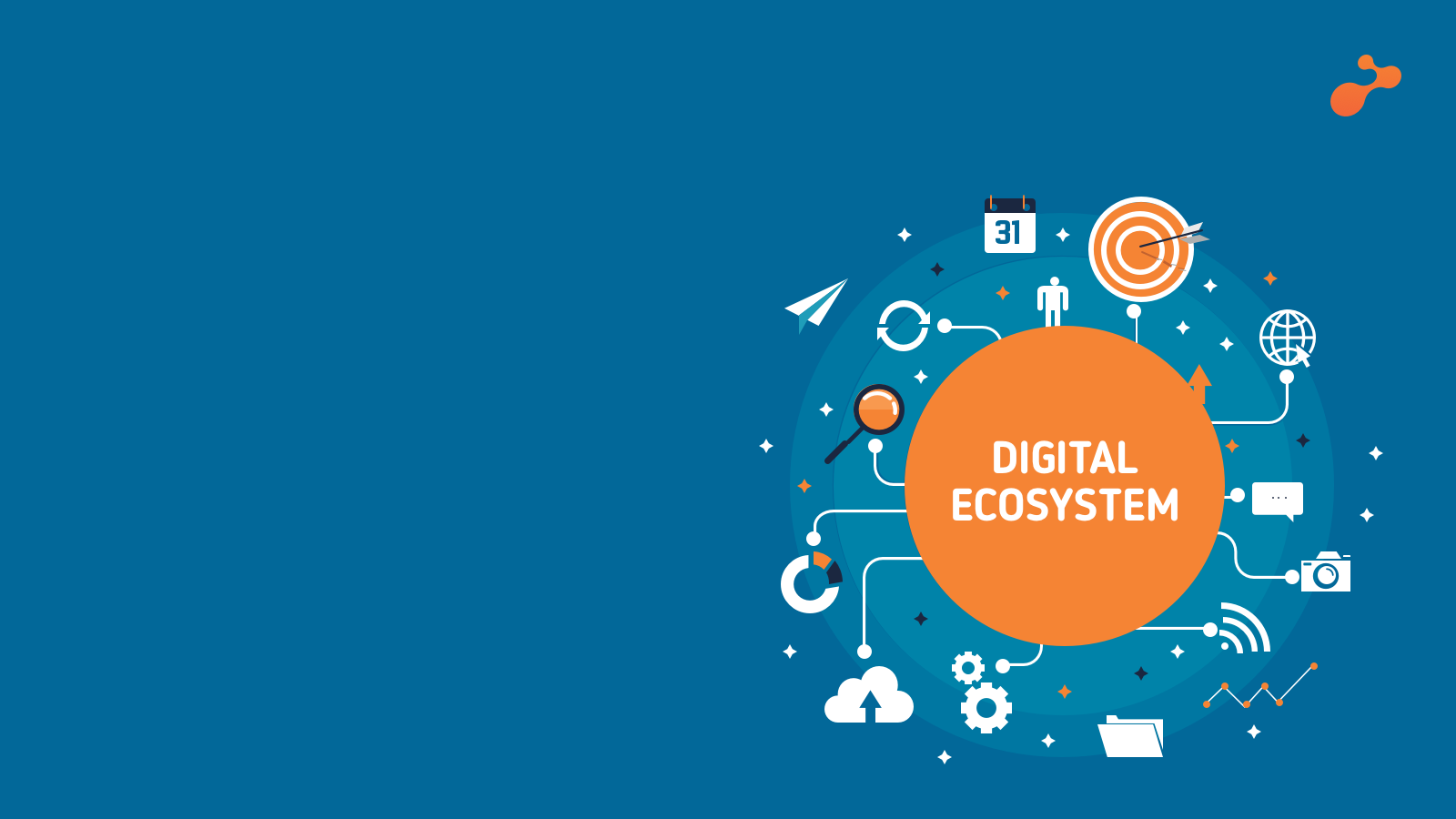
"Learn how to build a complete digital ecosystem for your business in 2027. Discover how websites, custom software, mobile applications, cloud infrastructure, CRM systems, automation, SEO, and digital marketing work together to improve business operations, customer experience, and long-term growth. Explore practical steps to create an integrated digital ecosystem with the right technology partner."
How to Build a Complete Digital Ecosystem for Your Business: A Step-by-Step Guide (2027)
Businesses today need more than just a website or a social media presence to compete in the digital marketplace. Customers expect smooth online experiences, employees need efficient tools, and business owners require accurate information to make better decisions.
This is where a complete digital ecosystem becomes important. A digital ecosystem connects different technologies, platforms, applications, and marketing channels so they work together as part of one business system.
For example, a customer might discover your business through Google, visit your website, submit an enquiry, receive an automated email, speak with your sales team, and eventually purchase through your application or online platform. When these systems are connected, the entire customer journey becomes more organized and efficient.
In this guide, we will explain how to build a complete digital ecosystem for your business, which technologies you may need, how to connect different systems, and how to choose the right development partner.
What Is a Digital Ecosystem?
A digital ecosystem is a connected collection of digital tools, technologies, platforms, and services that support different business activities.
It can include your business website, mobile application, customer relationship management (CRM) system, enterprise resource planning (ERP) software, cloud infrastructure, analytics tools, communication platforms, and digital marketing channels.
Instead of operating independently, these systems exchange information and support a more connected business workflow.
For example, when a customer submits a form on your website, their information can automatically enter your CRM system. Your sales team can receive a notification, follow up with the customer, and track the enquiry without manually transferring information between platforms.
Why Does Your Business Need a Digital Ecosystem?
As a business grows, managing operations through disconnected tools can become difficult. Information may be stored in different places, teams may repeat tasks, and customers may experience inconsistent communication.
A connected digital ecosystem can help address these challenges.
1. Better Business Efficiency
Integrated software and automation can reduce repetitive manual work. Teams can manage enquiries, tasks, customer information, and internal processes through connected systems.
2. Improved Customer Experience
Customers can interact with your business through websites, mobile applications, email, and other digital channels. A connected ecosystem helps create a more consistent experience across these touchpoints.
3. Centralized Business Information
When business systems are integrated properly, employees can access relevant information without switching between multiple disconnected platforms.
4. Better Decision-Making
Analytics and reporting tools help business owners understand website performance, customer behaviour, sales activities, and operational trends.
5. Easier Business Growth
A well-planned digital foundation can make it easier to add new services, users, applications, integrations, and business processes as the organization expands.
Essential Components of a Complete Digital Ecosystem
Every business has different requirements. However, most digital ecosystems are built around several important components.
1. A Professional Business Website
Your website is often the first digital interaction a potential customer has with your company. It should clearly communicate your services, products, value proposition, and contact information.
A professional business website should include:
- Responsive design for mobile, tablet, and desktop devices.
- Clear service and product information.
- Fast-loading pages and good website performance.
- Search engine-friendly structure.
- Contact forms and enquiry options.
- Secure connections and appropriate security measures.
- Integration with analytics and CRM tools where required.
Depending on your business model, you may also need an e-commerce website, customer portal, booking system, or custom web application.
Explore DelegateSpace web development services to understand how custom websites and web applications can support business requirements.
2. Custom Software and Business Applications
Ready-made software can handle many common business activities. However, some organizations have unique workflows that require specialized solutions.
Custom software can help businesses manage:
- Customer and employee information.
- Sales and lead management.
- Inventory and order processing.
- Project and task management.
- Internal approval workflows.
- Business reporting and dashboards.
- Industry-specific operational processes.
For example, a growing service company might need a centralized platform where employees can manage projects, customers can track progress, and managers can monitor business performance.
Custom software should be developed around actual business requirements rather than adding unnecessary features.
3. Mobile Applications
Mobile applications can extend your digital ecosystem beyond your website. They provide customers and employees with convenient access to important services and information.
Depending on your requirements, a mobile application may support:
- Customer accounts and profiles.
- Online bookings and payments.
- Order tracking and notifications.
- Employee communication.
- Task and project updates.
- Customer support.
- Real-time information and service access.
A mobile application is especially useful when users need frequent access to your services or when your business requires mobile-specific functionality.
Learn more about mobile app development services by DelegateSpace.
4. CRM and Customer Management
A Customer Relationship Management (CRM) system helps businesses organize customer information and manage interactions throughout the sales process.
A CRM system can help your team:
- Store customer contact details.
- Track enquiries and potential customers.
- Manage sales opportunities.
- Record customer communication.
- Schedule follow-ups.
- Monitor sales activities.
Connecting your website forms, email platform, and CRM can reduce manual data entry and help your sales team respond more efficiently.
5. Cloud Infrastructure and Hosting
Your digital ecosystem needs reliable infrastructure to store data, host applications, and support users. Cloud infrastructure can provide flexible computing resources depending on the needs of your business.
Cloud and hosting solutions may support:
- Website and application hosting.
- Database management.
- Data storage and backup.
- Application deployment.
- Infrastructure monitoring.
- Scalability and resource management.
Choosing the right hosting environment depends on application requirements, expected traffic, security needs, performance, and budget.
Explore DelegateSpace hosting services for business website and application infrastructure requirements.
6. Digital Marketing and SEO
Building digital platforms is only one part of creating a digital ecosystem. Your business also needs a strategy to attract relevant audiences and generate enquiries.
Digital marketing helps connect your website and business services with potential customers through different online channels.
Important activities include:
- Keyword research and search intent analysis.
- On-page and technical SEO.
- Content marketing and blog publishing.
- Social media marketing.
- Search engine advertising.
- Local SEO where relevant.
- Website analytics and conversion tracking.
SEO can help improve your website's visibility in relevant search results over time, while paid campaigns can support targeted promotional activities.
Discover DelegateSpace digital services for website development, software solutions, and digital marketing requirements.
7. Automation and System Integration
Automation connects different parts of your business and reduces the need for repetitive manual activities.
For example:
- A website enquiry can automatically create a CRM lead.
- A new customer registration can trigger a welcome email.
- A successful order can update inventory records.
- A task assignment can notify the responsible employee.
- A payment confirmation can update an order status.
APIs and integration tools can help different applications exchange information. Before connecting systems, define which data should be shared, who can access it, and what should happen when an integration fails.
How to Build a Complete Digital Ecosystem: Step-by-Step
Building a digital ecosystem requires planning. Instead of purchasing multiple tools immediately, begin with your business goals and identify the systems that will provide the most value.
Step 1: Understand Your Business Requirements
Start by identifying the problems you want technology to solve. Different businesses have different operational needs.
Ask questions such as:
- How do customers discover and contact your business?
- Which business activities are currently manual?
- Where is customer information stored?
- Which tasks consume the most employee time?
- What information do managers need to make decisions?
- Which systems should communicate with each other?
Document your existing workflows and identify areas where digital solutions can improve efficiency.
Step 2: Define Your Digital Strategy
Once you understand your requirements, decide what your digital ecosystem should achieve.
For example, your goals might include increasing qualified enquiries, improving customer service, reducing manual data entry, managing employees more effectively, or creating a new online revenue channel.
Prioritize measurable business outcomes instead of selecting technology simply because it is popular.
Step 3: Choose the Right Technology
Select platforms and technologies based on functionality, scalability, security, integration capabilities, and maintenance requirements.
Your technology choices may include:
- Website and web application frameworks.
- Custom business software.
- CRM and ERP platforms.
- Mobile application technologies.
- Cloud hosting and database services.
- Analytics and marketing platforms.
- Automation and API integration tools.
Not every business needs every tool. Start with the essential systems and expand as your requirements grow.
Step 4: Develop or Improve Your Website
Create a professional website that works as the central digital destination for your business.
Focus on clear navigation, useful content, responsive design, performance, accessibility, and conversion-focused pages.
Make sure customers can easily understand what you offer and how they can contact or purchase from your business.
Step 5: Implement Business Software
Choose ready-made applications or develop custom software depending on your workflows.
If your business requires specialized processes, custom software can help create a solution that matches your operational requirements.
Start with essential functionality, test it with actual users, and introduce additional features based on feedback.
Step 6: Connect Your Digital Platforms
Integration is what turns separate digital tools into a connected ecosystem.
Connect systems through APIs, webhooks, or supported integrations where appropriate. Establish clear rules for data synchronization, access permissions, error handling, and ownership of business information.
Test the complete workflow to confirm that information moves correctly between platforms.
Step 7: Strengthen Security and Data Management
Security should be considered throughout the development and implementation process, not added only after launch.
Important practices include:
- Using HTTPS and secure communication.
- Applying role-based access controls.
- Using strong authentication methods.
- Maintaining regular backups.
- Keeping software and dependencies updated.
- Monitoring application activity.
- Following applicable privacy and data protection requirements.
Businesses should also establish clear policies for data collection, retention, access, and deletion.
Step 8: Build Your Digital Marketing Strategy
After launching your digital platforms, focus on attracting the right audience.
Create a marketing plan that combines SEO, useful content, social media, email marketing, and paid advertising where appropriate.
Make sure marketing campaigns lead visitors to relevant pages and that enquiries can be tracked through your business systems.
Step 9: Track Performance and Improve Continuously
A digital ecosystem should evolve as your business changes.
Monitor useful performance indicators such as:
- Website traffic and organic search visibility.
- Enquiry and lead conversion rates.
- Customer acquisition cost.
- Sales performance.
- Application usage and engagement.
- Task completion and operational efficiency.
- System uptime and application errors.
Review these metrics regularly and improve the parts of your ecosystem that are not delivering the expected results.
Example: How a Connected Digital Ecosystem Works
Consider a company that provides professional services to customers. It wants to generate online enquiries, manage its sales pipeline, deliver services, and maintain customer relationships.
Its digital ecosystem might work like this:
- Customer discovery: A potential customer finds the company through Google or social media.
- Website interaction: The customer visits the website and explores available services.
- Lead generation: The customer submits an enquiry form.
- CRM update: The enquiry is recorded in the CRM system.
- Team notification: The sales team receives a notification and follows up.
- Project management: After confirmation, the project is assigned to the relevant team.
- Customer communication: The customer receives updates through the appropriate communication channel.
- Reporting: Managers review enquiries, project progress, and business performance through reports.
This connected workflow helps reduce information gaps and makes it easier to manage the customer journey.
Common Mistakes to Avoid When Building a Digital Ecosystem
1. Choosing Too Many Tools
Using too many disconnected applications can increase complexity. Choose tools that solve clear business problems and integrate with your existing systems.
2. Ignoring Integration Requirements
Applications that do not share information can create duplicate records and manual work. Evaluate integration capabilities before selecting software.
3. Overlooking User Experience
Technology should make work easier. Involve employees and customers in testing important workflows before a full rollout.
4. Neglecting Security
Weak access controls, outdated software, and poor backup practices can expose important business information. Make security part of your implementation plan.
5. Building Everything at Once
A large digital transformation project can become expensive and difficult to manage. Start with high-priority requirements, launch in phases, and expand based on actual results.
6. Not Measuring Results
Without clear performance indicators, it becomes difficult to understand whether your digital investment is helping the business. Define success metrics before implementation.
How to Choose the Right Digital Solutions Partner
Building a complete digital ecosystem may require expertise in web development, custom software, mobile applications, cloud infrastructure, system integration, and digital marketing.
When selecting a technology partner, consider the following factors:
- Technical expertise: Check whether the company has experience with the technologies your project requires.
- Business understanding: The development team should understand your workflows and business objectives.
- Relevant portfolio: Review previous websites, applications, portals, and software projects.
- Integration experience: Confirm that the team can connect different platforms and manage data flow.
- Security approach: Discuss authentication, access control, backups, and data protection.
- Communication: Choose a partner that provides clear project updates and documentation.
- Ongoing support: Understand how maintenance, improvements, and technical issues will be handled after launch.
The right partner should help you select practical solutions instead of recommending unnecessary technology.
Build Your Business Digital Ecosystem with DelegateSpace
Creating a connected digital ecosystem requires the right combination of technology, planning, and execution. Your website, applications, business software, cloud infrastructure, and digital marketing activities should support the same business objectives.
DelegateSpace provides digital services that can support different stages of this journey, including:
- Custom software development for business-specific requirements.
- Web development for professional websites and custom web applications.
- Mobile app development for Android and iOS solutions.
- Cloud and hosting services for digital infrastructure needs.
- SEO and digital marketing services to improve online visibility.
Whether you are starting your first business website or planning a larger digital transformation project, the important step is to begin with a clear understanding of your requirements.
Explore DelegateSpace to learn more about its digital solutions, visit the services page, or contact the team to discuss your project requirements.
Frequently Asked Questions (FAQs)
1. What is a digital ecosystem in business?
A digital ecosystem is a connected group of technologies, applications, platforms, and digital services that work together to support business operations, customer interactions, and growth.
2. What are the main components of a digital ecosystem?
Common components include a business website, custom software, mobile applications, CRM or ERP systems, cloud infrastructure, automation tools, analytics platforms, and digital marketing channels.
3. Does every business need a custom digital ecosystem?
Not necessarily. Small businesses can begin with ready-made tools and a professional website. Custom development becomes useful when existing solutions cannot support specific workflows, integrations, or business requirements.
4. How much does it cost to build a digital ecosystem?
The cost depends on the number of platforms, software features, integrations, infrastructure requirements, security needs, and project complexity. A basic setup may require a smaller investment, while a fully integrated ecosystem with custom applications can require a larger budget. A detailed requirement analysis is recommended before estimating costs.
5. How long does it take to build a digital ecosystem?
The timeline depends on project scope. A basic website and business tool setup may be completed relatively quickly, while custom software, mobile applications, and multiple integrations can require several development phases.
6. Can existing business software be integrated into a digital ecosystem?
Yes, many existing platforms can be integrated through APIs, webhooks, or supported connectors. Integration feasibility depends on the software's available features, permissions, and technical limitations.
7. Why is cloud infrastructure important for a digital ecosystem?
Cloud infrastructure can support application hosting, data storage, deployment, backups, and flexible computing resources. The appropriate setup depends on your business requirements and security needs.
8. How does SEO support a digital ecosystem?
SEO helps potential customers discover your business through relevant search queries. When connected with website analytics and lead management, it can also help businesses understand which organic channels generate enquiries.
Conclusion
Building a complete digital ecosystem is about creating a connected business environment where technology supports your operations, employees, and customers.
Start by understanding your business requirements, selecting the right platforms, developing essential digital solutions, and connecting systems through reliable integrations. Pay attention to security, user experience, marketing, and performance measurement throughout the process.
You do not need to build everything at once. Begin with the systems that solve your most important business challenges and expand your digital ecosystem as your organization grows.
With the right strategy and technology partner, your business can create a stronger digital foundation for long-term growth.
```Transform these insights into functional software products
From responsive website design and mobile apps to custom AI workflows and cloud architectures, our developers build secure, scalable solutions designed to scale.